
Today we went to Kejimkujik National
Park (Seaside Adjunct) to walk around the rocky shore and look for animals. Here is Lycos
enjoying the view:

As the week has gone on, we have
become much better trackers. We were hoping to see porcupines, but only found
piles of scat. This amount of scat suggests that a porcupine was hanging out on the tree above this spot.

Now, why would Dr. Christina and Dr.
Chris want us to be better trackers? They have been using us to help monitor
the animals in their different areas of the research site.
There are many different ways to get
the information about animals.
-Observations
-Field signs
Scat
Footprints
Burrows
Feeding
signs
Fur/hairs
Trails
Remains
Sounds (Which animals would be good to count by sound?)
Scent
(urine)
(Which field signs could provide DNA
information?)
-Trapping
Physical
traps (like our box traps)
Camera
Trap
There are two main types of camera
traps: Passive infra-red and active infra-red. We set out passive infra-red
cameras.

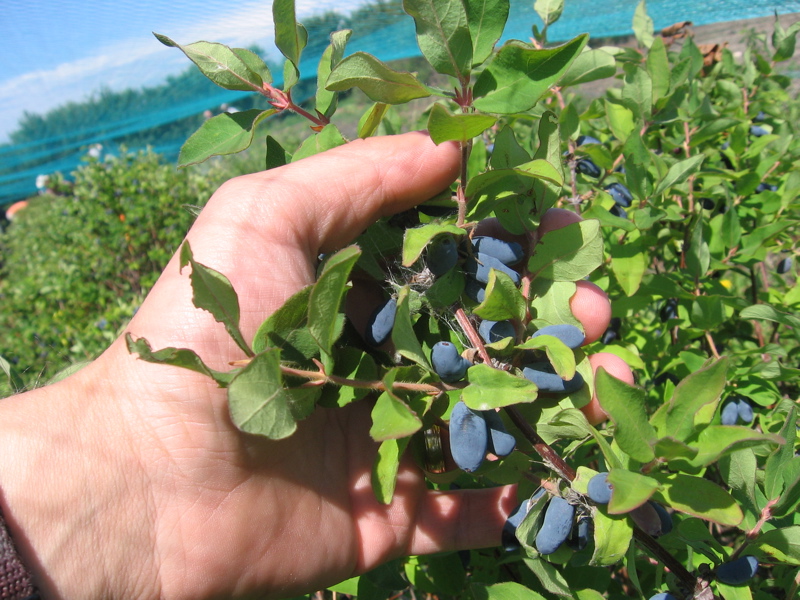 |
| Haskap Berries |
Dr. Chris and Dr. Christina have started a Haskap orchard near
the field site, so they are very interested in what animals are getting in to
the orchard, before the bushes start to flower. Apparently Haskap berries
taste like a combination of a blueberry, raspberry, and cherry. Our fellow
volunteer, Ms. Nola, lives in the area that developed the berry (Saskatchewan
Canada).
|
What type of animals do you think we will see trying to go under the fence? Why?


